The AI Readiness Gap - Why Organisations Are Struggling
AI capabilities are doubling every four months . Yet organisations across every sector are struggling to capitalise on this exponential growth. The problem isn't the technology—it's readiness.
AI capabilities are doubling every four months . Yet organisations across every sector are struggling to capitalise on this exponential growth. The problem isn't the technology—it's readiness.
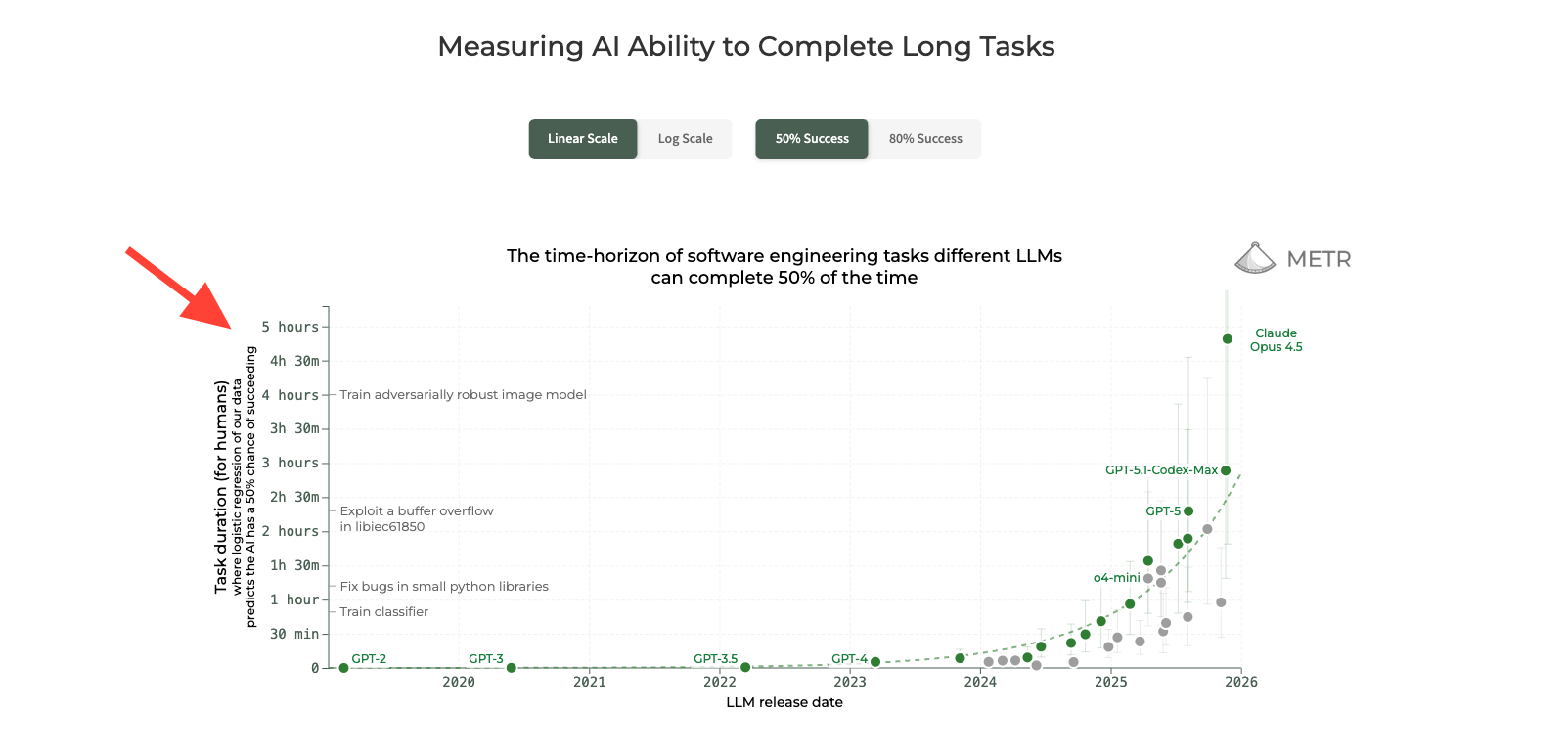
Recent research from METR reveals a striking trend: AI task completion capability is growing exponentially, doubling approximately every seven months for the last six years. Seven months ago, AI could reliably complete tasks that took humans about 30 minutes. Today, that's closer to one hour. By summer, we're looking at 2-hour tasks. By year-end, potentially 4-hour tasks.
This exponential curve creates an urgent strategic question: Is your organisation positioned to capture value as AI capabilities expand? Or are you stuck in a readiness gap that's widening every quarter?
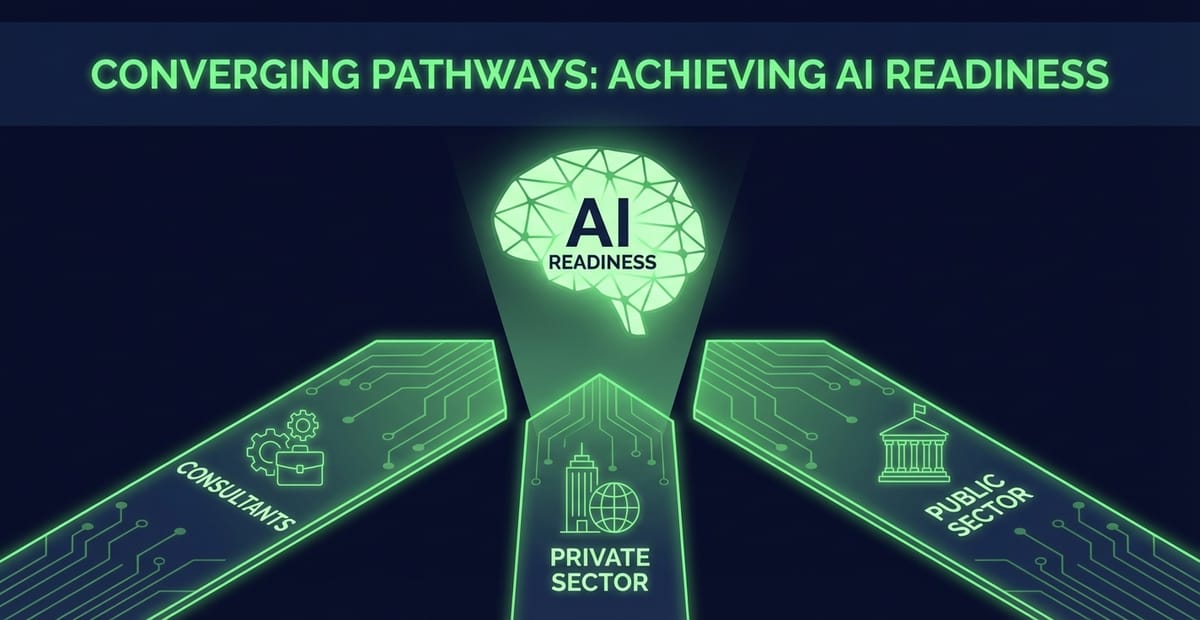
The answer depends on which of three common scenarios describes your situation.
The Consultant's Dilemma: Expertise That Doesn't Scale
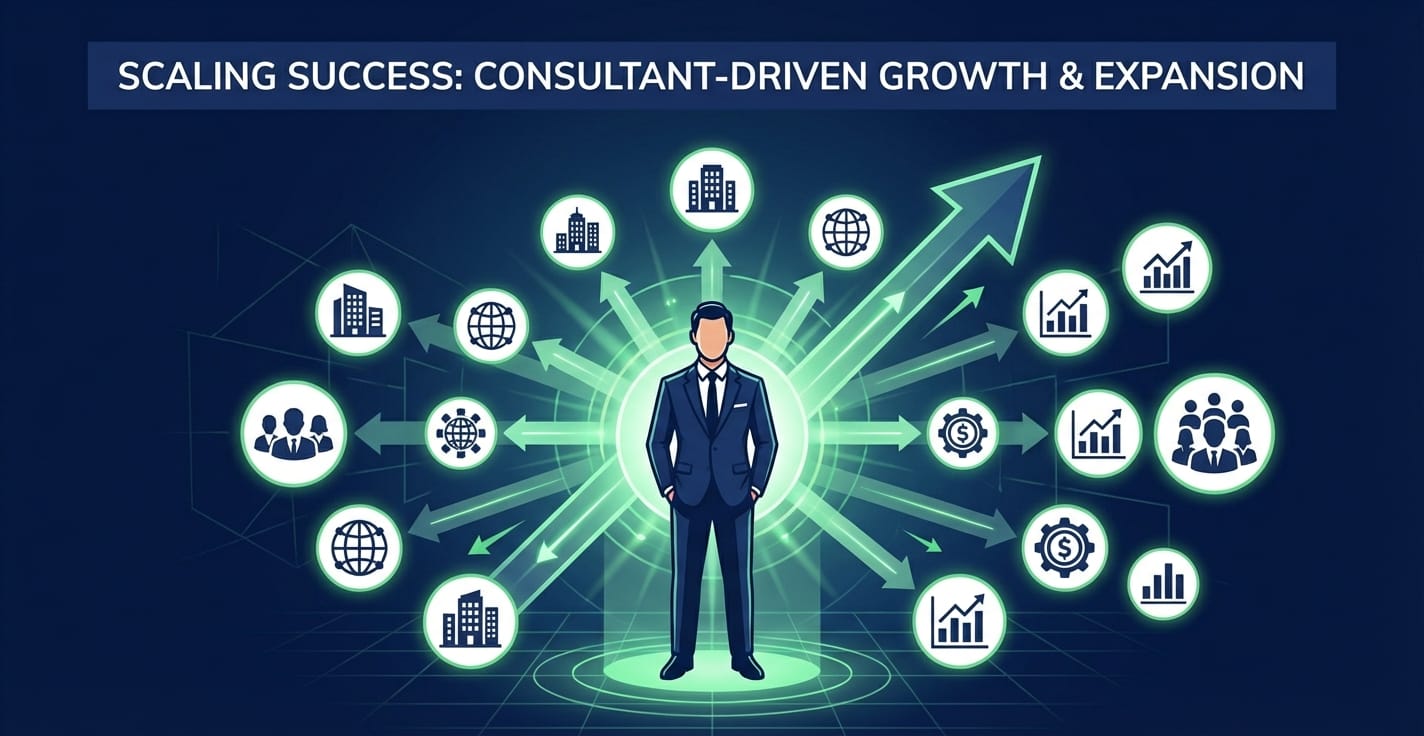
If you're an AI consultant or digital transformation advisor, you're facing a paradox. Your clients are asking more questions about AI than ever before. According to Anthropic's Economic Index, directive automation has risen from 27% to 39% of professional work—meaning businesses are actively seeking AI implementation guidance at unprecedented rates.
Yet the traditional consulting model is breaking under this demand. Creating custom AI readiness frameworks takes 2-3 weeks per client. Discovery calls, custom spreadsheets, manual analysis, detailed report writing. By the time you deliver that analysis, your client's competitors have already moved forward with implementation.
You're trading time for money in a market where speed matters more every quarter. The consultants who are succeeding have made a fundamental shift: they've standardized 80% of the assessment process while maintaining flexibility for the 20% that's truly custom. They're delivering professional AI readiness insights in 15 minutes instead of 2-3 weeks, which allows them to serve 10x more clients without compromising quality.
The alternative is becoming unscalable. When AI capabilities are doubling every seven months, clients can't wait weeks for frameworks. They need fast, accurate assessments that identify gaps and create implementation roadmaps. Consultants who leverage standardized tools to scale expertise are thriving. Those who remain manually intensive are finding it harder to compete on both speed and price.
The Private Sector Challenge: Starting With Technology Instead of Readiness
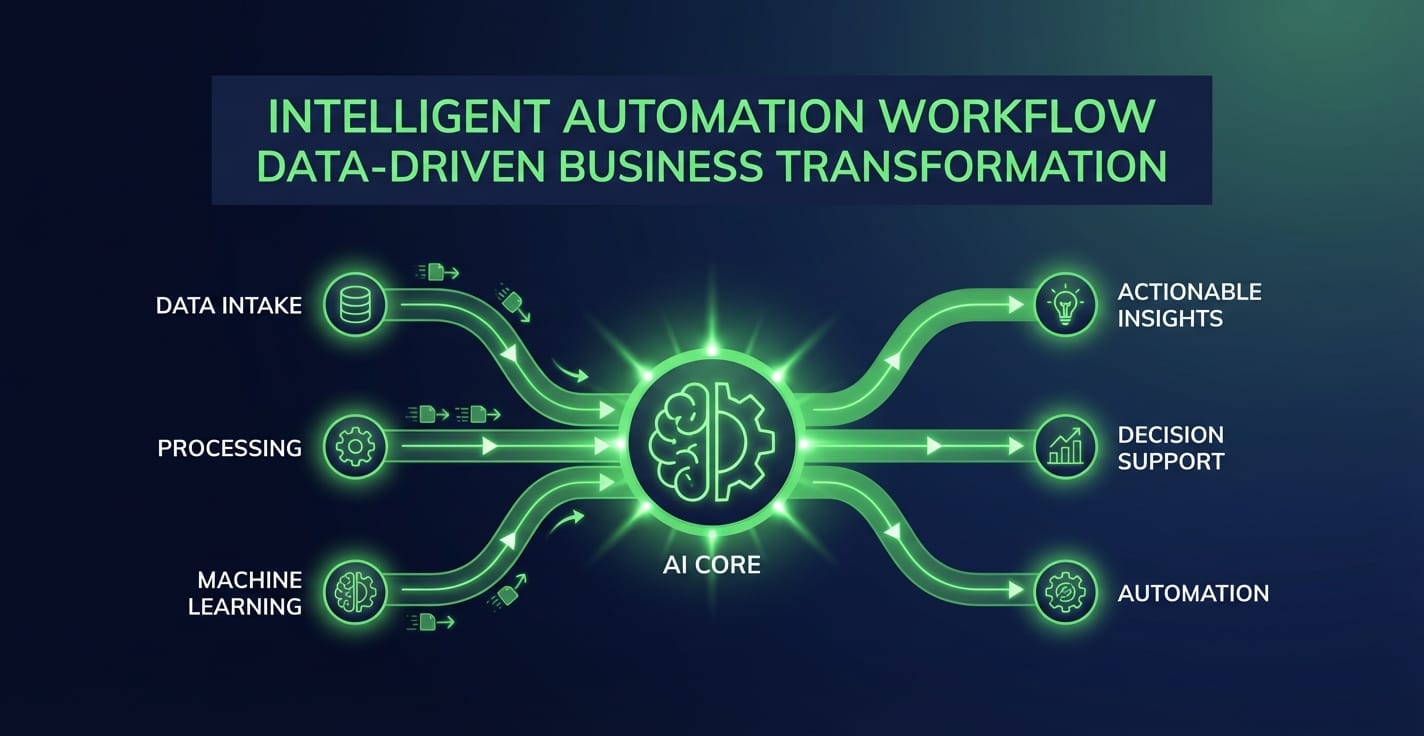
If you're a business leader at a private company, you've likely witnessed this pattern: organisation reads about generative AI, gets excited, buys enterprise licenses for AI tools, and six months later... nothing has changed. The tools sit unused. Teams are confused. Leadership is frustrated. Budgets are wasted.
Eighty percent of AI initiatives fail, and the root cause is consistent: companies start with "What AI tool should we buy?" instead of "Are we ready for AI?"
AI readiness breaks down into five critical categories. Strategic awareness represents 25% of readiness—does leadership understand AI's potential and limitations? Have you defined what success looks like? Without strategic clarity, even the best tools fail.
Data infrastructure carries 30% of the weight and it's the number one killer of AI projects. AI is only as good as your data. If your critical business data is scattered across systems, poorly organized, or ungoverged, AI implementation will surface those problems immediately.
Technical readiness (20%) addresses whether existing systems can integrate with AI tools. Organizational readiness (15%) measures whether teams have the skills and whether there's a culture that supports experimentation. Use case alignment (10%) asks whether you've identified specific workflows where AI creates measurable value.
Companies that assess these five categories before buying tools implement faster, waste less money, and achieve better outcomes. They know their gaps before spending on technology. They build organizational buy-in during assessment, not after implementation fails.
And timing matters more than most executives realize. Anthropic's research shows AI reduces task time by an average of 80% for work in its current capability range. The current sweet spot is tasks under one hour: data analysis, content drafting, research synthesis, document summarization. If you're not automating these workflows now, you're leaving money on the table. As AI handles longer tasks over the next 6-12 months, complex workflows become automatable—but only for companies that built readiness foundations today.
The Public Sector Paradox: Different Playbook, Same Urgency
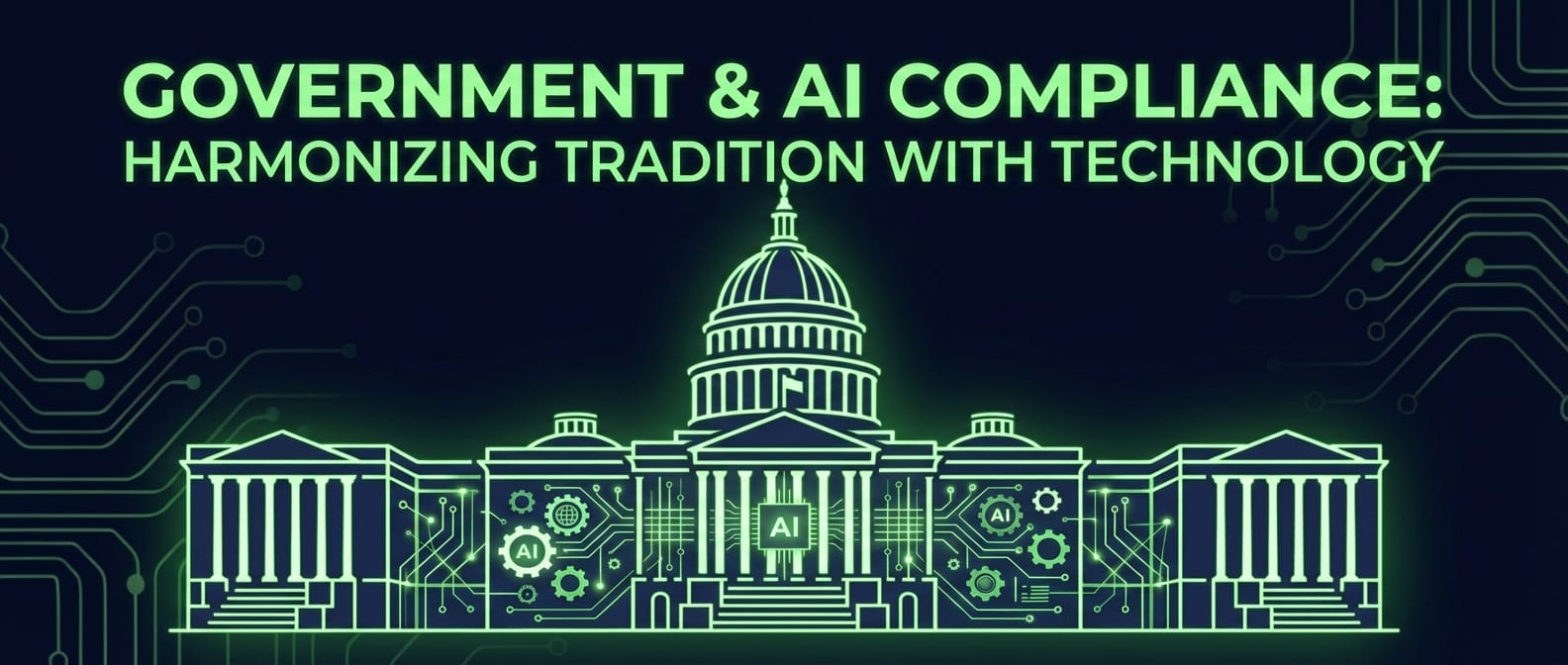
If you're leading AI initiatives in government, you've probably noticed that private sector best practices don't translate cleanly to public sector realities. There's a reason for that: public sector AI requires a fundamentally different framework.
Private companies can move fast and iterate. Government agencies operate under legal mandates, algorithmic transparency requirements, and public accountability standards. This isn't a disadvantage—it's a different operating context that demands specialized assessment.
AI readiness for government needs a sixth category beyond the standard five: Regulatory and Compliance readiness. This encompasses procurement regulations, citizen data privacy laws, algorithmic transparency requirements, and audit trail obligations. Skipping this category is why so many government AI projects stall.
Legacy systems present another fundamental difference. Private companies can replace outdated technology. Government agencies often cannot—systems are mandated by legislation, integrated across departments, or running critical services that cannot go offline. Your AI readiness assessment must account for integration complexity, not assume systems can be replaced.
Citizen trust represents the primary currency. A failed AI experiment at a tech company costs money. A failed AI experiment in government costs public trust—something far harder to rebuild. The bar for explainability, fairness, and accountability is exponentially higher.
Budget cycles add complexity. Private companies can pivot funding when opportunities emerge. Government agencies plan budgets years in advance. AI readiness assessment needs to either identify opportunities that fit existing budget frameworks or build the data-driven case for allocation two fiscal years out.
Yet despite these constraints, the urgency is identical. AI capabilities are doubling every seven months in both sectors. The agencies that will lead transformation aren't the ones with the biggest budgets—they're the ones who assessed readiness first using frameworks appropriate to public sector realities.
The Common Thread
Whether you're a consultant trying to scale expertise, a business leader trying to implement AI successfully, or a public sector leader trying to navigate compliance while innovating—the solution starts with the same step: rigorous assessment of current readiness.
You cannot optimise what you haven't measured. You cannot build on a foundation you haven't evaluated. And in a landscape where AI capabilities are doubling every seven months, the cost of delayed assessment compounds quickly.
The organisations succeeding with AI didn't start by buying tools. They started by understanding where they stood. They identified their gaps with precision. They built stakeholder alignment around shared data. They made strategic investments based on evidence, not enthusiasm.
They assessed first. Then they implemented. And that sequence made all the difference.
Ready to assess your AI readiness?
Whether you're a consultant looking to scale your practice, a business leader planning AI implementation, or a public sector leader navigating government-specific challenges—start with a structured assessment.
CogniFlow provides AI readiness assessments tailored to your specific context:
- Consultants: Multi-client management, aggregate analytics, scalable assessments
- Private Sector: 5-category framework with personalised recommendations
- Public Sector: 6-category framework including Regulatory & Compliance
Take the 15-minute assessment that identifies your gaps and creates your roadmap.